

How to Rank on Google Maps in Orlando: The 2026 Guide
The profile, citations, reviews, links and pages that put a local business in the Map Pack.








If you run a business in Orlando, your customers search Google before they pick up the phone. For most local searches, the first thing they see is the Map Pack: three businesses with a map, a rating and a call button. If you are not one of the three, most of those searchers never reach you.
This guide covers what moves a business up on Google Maps in 2026: your Google Business Profile, citations, reviews, local links, your website and the way AI search now reads all of it. It is the same order of work we follow in our local SEO services.
What is local SEO, and why does it matter here?
Local SEO is the work that makes your business show up when someone nearby searches for what you sell. Type “roof repair near me” or “dentist in Lake Nona” and Google decides which businesses to show based on three things it names publicly: relevance, distance and prominence.
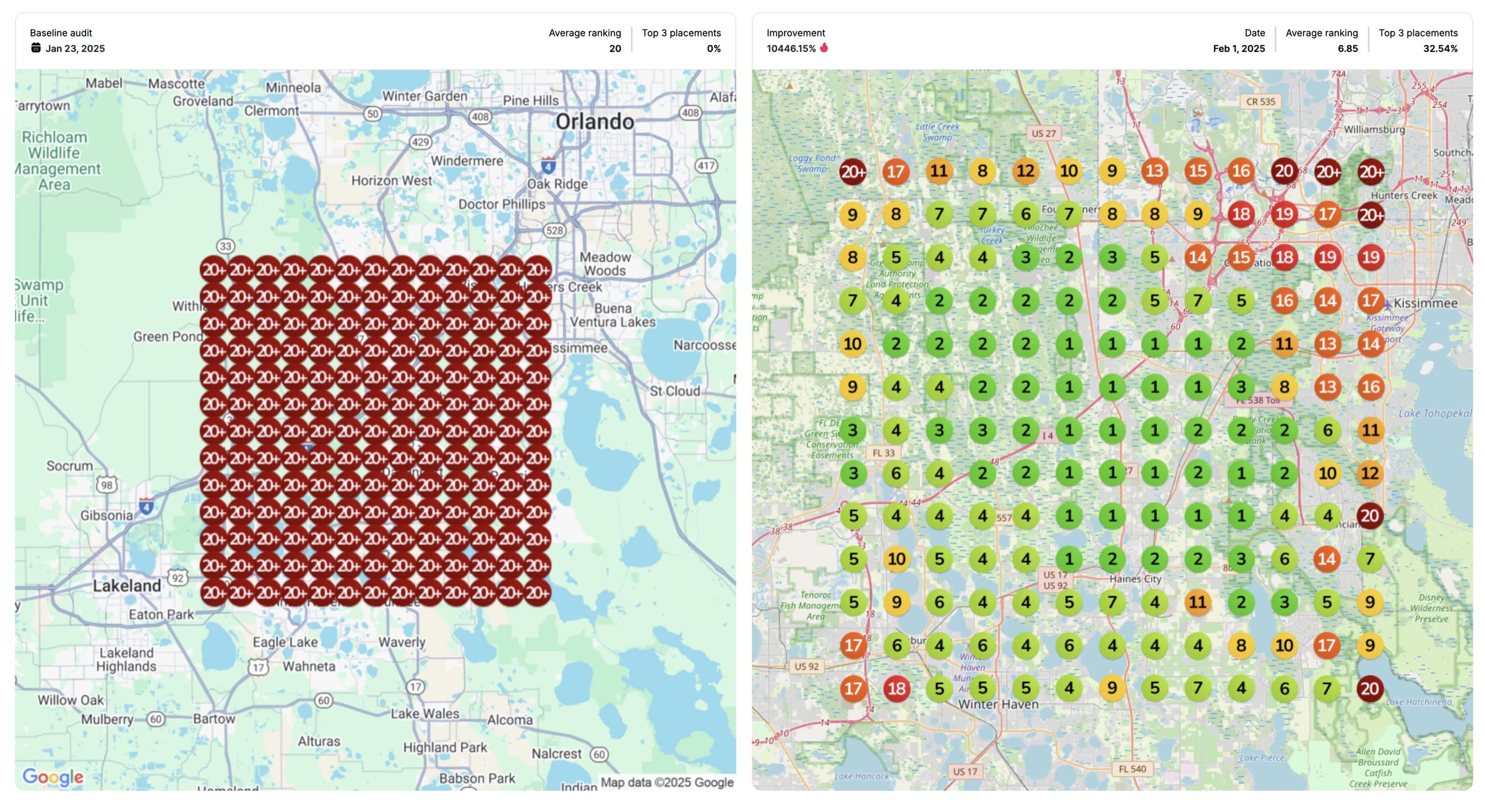
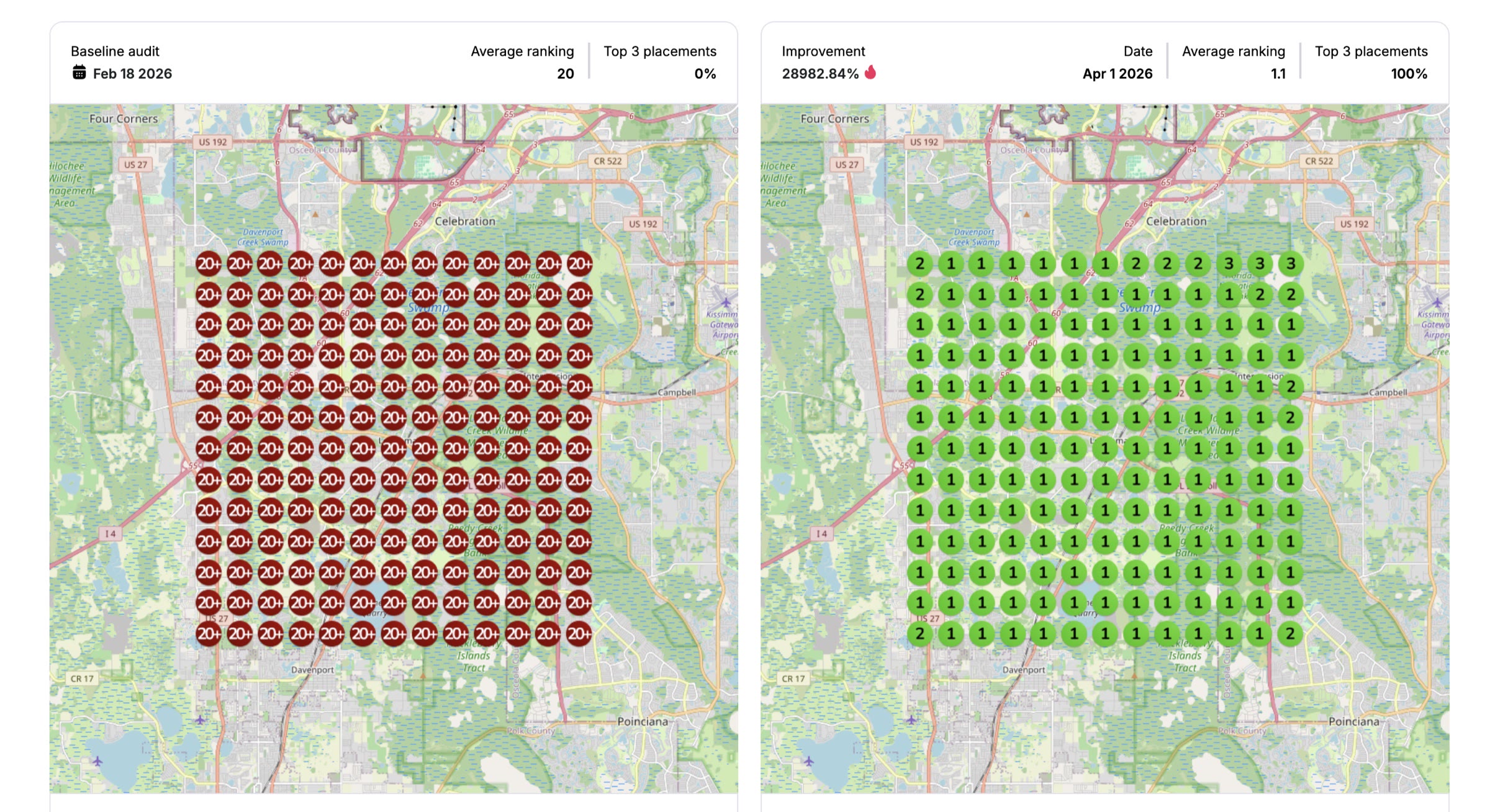
Orlando makes that harder than most cities. Residents, seasonal visitors and new businesses all compete for the same three spots, and the results change from one neighborhood to the next. A shop that ranks in College Park can be invisible in Dr. Phillips. That is why local SEO is measured across a map, not with a single position.
Your Google Business Profile comes first
Your Google Business Profile (GBP) is what appears in the Map Pack, in Google Maps and in the panel beside a search for your name. For Maps rankings, no other asset carries as much weight. Get these parts right before anything else.
- Name, address and phone (NAP). Use your real business name and keep the details identical everywhere online. “Ave” versus “Avenue” or a missing suite number is enough to create a mismatch.
- Primary category. It is the strongest relevance signal you control. Search your main service in Google Maps, look at who holds the top three spots and note the category they use. Pick the most specific one that describes your core work.
- Secondary categories. Add the ones that describe services you really offer. Skip the ones that don’t.
- Services. Fill in every service Google suggests for your category and add your own, each with a plain description.
- Hours. Keep them accurate, holidays included. A customer who drives to a closed door leaves the kind of review nobody wants.
- Photos. Upload real photos of your team, your work and your location, and keep adding new ones. Stock images do nothing for trust.
Citations: the same details, everywhere
A citation is any online mention of your business name, address and phone number: Yelp, Apple Maps, Bing Places, the BBB, industry directories. Google uses them to confirm your business is real and located where you say it is. Audit the listings you already have and fix the wrong ones before you build new ones.
Every listing should match one master record. Ours looks like this:
- Business name: 57 Clicks Marketing Agency
- Address: 411 E Central Blvd Ste 101, Orlando, FL 32801
- Phone: (407) 974-6620
- Website: https://www.57clicks.com
Where to list an Orlando business
- Must have: Google Business Profile, Bing Places, Apple Maps, Facebook, Yelp, the BBB and your local chamber of commerce.
- Worth adding: general directories such as Manta, MerchantCircle, Foursquare, Hotfrog, Brownbook, CitySquares, EZlocal and Cybo.
- Industry and local: Angi or Houzz for home services, Healthgrades for medical practices, plus Orlando-area directories and trade associations.
Data aggregators such as Data Axle, Neustar Localeze and Foursquare feed many smaller directories. Submitting your record there once saves hours of manual work.

See where you rank on the map.
We check your profile, your citations and your top three competitors. No contract.
Reviews: the signal you control every week
Google looks at how many reviews you have, how good they are, how recent they are and whether you answer them. Recency matters more than most owners think. A steady trickle of new reviews beats a big total that stopped growing a year ago.
Reply to every review, good or bad, within a day or two. A thoughtful reply shows the next customer how you treat people. Never pay for reviews or offer anything in exchange for one: that breaks Google’s rules.
Four more things the top three do
The businesses that hold the Map Pack in competitive Orlando categories rarely win on one tactic. They keep working on all of these at once.
Local links
You don’t need thousands of backlinks. You need relevant, local ones: suppliers, trade associations, the chamber of commerce, sponsorships and local publications that cover your industry. One link from a real Orlando organization is worth more than a hundred from sites nobody reads.
Real engagement on your profile
Calls, website clicks, direction requests and photo views tell Google that people choose your business. Treat the profile as a marketing channel: post updates, add photos and keep services current.
Pages that match the search
A generic “Services” page won’t rank for anything specific. Give each service its own page with one clear topic, a title that leads with the service and the city, a single H1 and answers to the questions customers ask.
One page per city, written from scratch
If you serve Orlando, Kissimmee, Winter Garden and Davenport, each city needs its own page with its own content. Swapping the city name in the same text is easy for Google to spot, and it holds every copy back. Add LocalBusiness and FAQPage schema so search engines read each page correctly.
How AI search changes local SEO in 2026
Google AI Overviews, ChatGPT and Perplexity now answer many local questions directly. They pull from website content, FAQs, reviews and business listings. If your site doesn’t answer the common questions about your service clearly, the answer comes from a competitor’s site, with their name attached.
The fix is plain. Write real FAQ sections on every service page, answer in complete sentences that make sense on their own and keep your business details consistent across the web. AI systems check legitimacy the same way Google Maps does: through matching listings and reviews.
How long does it take?
It depends on where you start. A profile that was never optimized usually shows its first movement within weeks of fixing the basics. Solid gains in the Map Pack tend to take three to six months of steady work, and crowded categories take longer. Nobody can promise a position, and anyone who does is guessing.
We have seen it from both ends. An impact windows contractor in Orlando went from a brand-new profile to the top three on Maps across most of its service area in three months. A mold remediation company moved its average Google position from 33 to 6 and more than tripled its Google clicks in five months.
Your 2026 Google Maps checklist
- Claim and complete your Google Business Profile.
- Audit every existing citation for NAP consistency.
- Build citations on the must-have and worth-adding directories.
- Submit your record to the data aggregators.
- Answer every review, within a day or two.
- Create a page for each service and each city you serve.
- Earn local links from Orlando organizations and publications.
- Add LocalBusiness schema markup to your website.
More on Google Maps.
SEO Company in Orlando
The service behind this guide: Maps, website and reporting.

Google Business Profile: Complete Optimization Guide
Every field of the profile, in order.

The Profile Errors We Found in 395 Remodelers
An audit of Orlando kitchen remodelers on Google.
Traditional SEO tries to rank a website for searches anywhere in the country. Local SEO targets customers in your service area and includes work that regular SEO skips: your Google Business Profile, citations, reviews and city-specific pages. For a business whose customers come from a defined area, local SEO is where the calls come from.
NAP stands for name, address and phone number. Consistency means those details are identical on your website, your Google Business Profile and every directory. Old addresses, different phone numbers or shortened business names make Google less sure which record is right, and that doubt costs you visibility on Maps.
Quick fixes such as categories, services and citation cleanup can move a profile within weeks. Reaching the top three for competitive searches usually takes three to six months of steady work, sometimes more. The honest answer depends on your category, your location and how strong the current top three are.
Yes, if you want to rank in those cities and you really serve them. Each page needs its own content: the services offered there, local details, photos and FAQs. Pages that repeat the same text with a different city name tend to be ignored, and they can drag down the rest of the site.
AI Overviews and chat assistants answer local questions using websites, reviews and business listings. They favor businesses with clear answers on their pages and consistent details across the web. The work that helps you on Google Maps, an accurate profile, fresh reviews and useful service pages, is the same work that gets you mentioned in AI answers.
Let’s put your business on the map.
Month-to-month. No long-term contracts.
Call (407) 974-6620