
How to Choose a Marketing Agency in Orlando in 2026
A practical process: what to compare, what to ask and how to read the proof before you sign.






Finding a dependable marketing agency in Orlando takes a clear process. Owners who search “marketing companies near me” or “SEO agency near Orlando” get pages of options that all promise growth. This guide gives you a way to compare them on evidence.
You will find plain definitions of the core services, a decision checklist, the common pricing models, how to read case studies and what good reporting looks like. The advice leans on what makes Orlando different: seasonality, tourism and neighborhoods that behave like separate markets.
What do Orlando marketing agencies offer?
Most agencies bundle five services, and each one does a different job. Local SEO makes you findable. Paid ads bring traffic fast. Social media builds a community. Content earns authority. Web design turns visitors into customers.
| Service | Typical deliverables | Why it matters in Orlando |
|---|---|---|
| SEO (local and technical) | Keyword research, on-page optimization, citations, Google Business Profile work | Visibility in Google Maps and neighborhood searches, including seasonal ones |
| PPC management | Campaign structure, geo-targeting, ad copy, conversion tracking | Fast traffic during events and tourist peaks, with bids set by area |
| Social media marketing | Content calendar, short-form video, work with local creators | Local engagement, event promotion and offers for visitors |
| Content marketing | Local guides, blog posts, landing pages | Authority for neighborhood and long-tail searches |
| Web design and conversion | Mobile-first layouts, fast pages, clear paths to call or book | Turns mobile searchers and Maps visitors into customers |
Agencies combine these into ongoing campaigns that follow Orlando’s tourism cycles and neighborhood demand. Two of them deserve a closer look.
What local SEO includes
Local SEO covers on-page optimization, technical fixes, citation management, schema markup and Google Business Profile work. The goal is a place in the Map Pack and in the organic results for searches in your area. Technical work, such as mobile speed and crawlability, keeps pages eligible to rank. Citation cleanup and review management add trust. Profile work is aimed at calls, direction requests and bookings.
How paid campaigns are managed
Google Ads campaigns are usually organized by geography (city, neighborhood or radius), by intent (brand, non-brand or service) and by platform. Good management means geo-targeted bids, ad copy that sounds local, conversion tracking for calls and forms, and remarketing to people who visited without contacting you.
Optimization is regular: search terms and bids are checked weekly, new ads are tested monthly and the strategy is reviewed each quarter around seasonal demand. Ask how the agency attributes results, so you can trace how paid channels contribute to bookings, calls and foot traffic.

What to look for in an agency near you
Choosing a local agency means weighing market knowledge, transparency, measurable results, communication, pricing clarity and industry fit. Compare every agency on the same seven points:
- Local market experience. Ask for campaigns tied to specific neighborhoods or to tourism, and how the strategy changed with local demand.
- Clear reporting and KPIs. Request a sample report that shows metrics, insights and recommended next steps.
- Proven results. Put measurable outcomes (traffic, calls, bookings) ahead of vague claims.
- Communication. Confirm how often you meet, who your contact is and how problems are escalated.
- Scope and pricing. Deliverables, timelines and the rules for changes should be in writing.
- Technical skill. Check their command of technical SEO, Google Analytics 4 and conversion tracking.
- Fit. Their working style and response time should match your team’s.
After each meeting, verify the claims with sample reports or references, and ask about context such as budget and timeline. That keeps the decision based on evidence, not on the pitch.
How much does local expertise matter?
A lot. An agency that knows the area matches search and ad tactics to how Orlando really moves: tourist peaks, event calendars and different intent in different parts of the metro. It will suggest location pages, profile updates timed to events and ad schedules that follow visitor flows. Ask for a concrete example of how a season or a local event changed their approach for a client.
Questions that reveal how an agency works
- How do you measure local search performance?
- Can you walk me through a recent report and explain what you changed because of it?
- What does onboarding look like, week by week?
- How do you attribute offline results such as store visits and phone orders?
- Who owns the website, the ad accounts and the data if we part ways?
Specific answers with metrics, timelines and examples show maturity. Vague deliverables, no sample reports or hesitation about measurement are red flags. Our FAQ page answers the questions we hear most.

Put us through the checklist.
Ask us every question on this page. We will answer with numbers.
How do marketing agencies charge?
Pricing depends on the model, the scope and how competitive your category is. The main cost drivers are technical complexity, the volume of content, the ad budget to manage and custom tracking. We don’t publish price ranges for other agencies because they vary too much to be useful. Ask each one for a written quote tied to deliverables.
| Pricing model | How it works | Best for |
|---|---|---|
| Monthly retainer | A fixed monthly fee for ongoing SEO, content, ad management and reporting | Businesses that want steady growth and continuous testing |
| Project-based | One price for a defined deliverable | Website redesigns, migrations and one-off campaigns |
| Performance-based | A commission or a fee per lead, tied to agreed KPIs | Lead generation, when tracking is solid and both sides trust it |
| Hourly or consulting | Paid by the hour | Audits, strategy sessions and specific technical fixes |
Each model has trade-offs. Retainers are predictable. Performance deals lower the upfront cost but need a clear definition of a valid lead and reliable tracking. Whatever the model, define the deliverables, the reporting cadence, the cancellation terms and how changes in scope are handled. A clear contract and an onboarding plan make proposals easier to compare.
How to assess return
Measure each service by what it is meant to do. For SEO, track organic traffic, the leads it produces and what a new customer is worth over time. For ads, watch cost per lead and return on ad spend. For social, look at how engagement turns into inquiries.
The math is simple: ROI = (revenue from the channel − cost of the channel) ÷ cost of the channel. Local attribution usually needs call tracking, UTM tags and a link to your CRM or point of sale, so ask how the agency connects online activity to offline sales. Expect ads to show measurable results within weeks and SEO to take three to six months.
How to read an agency’s proof
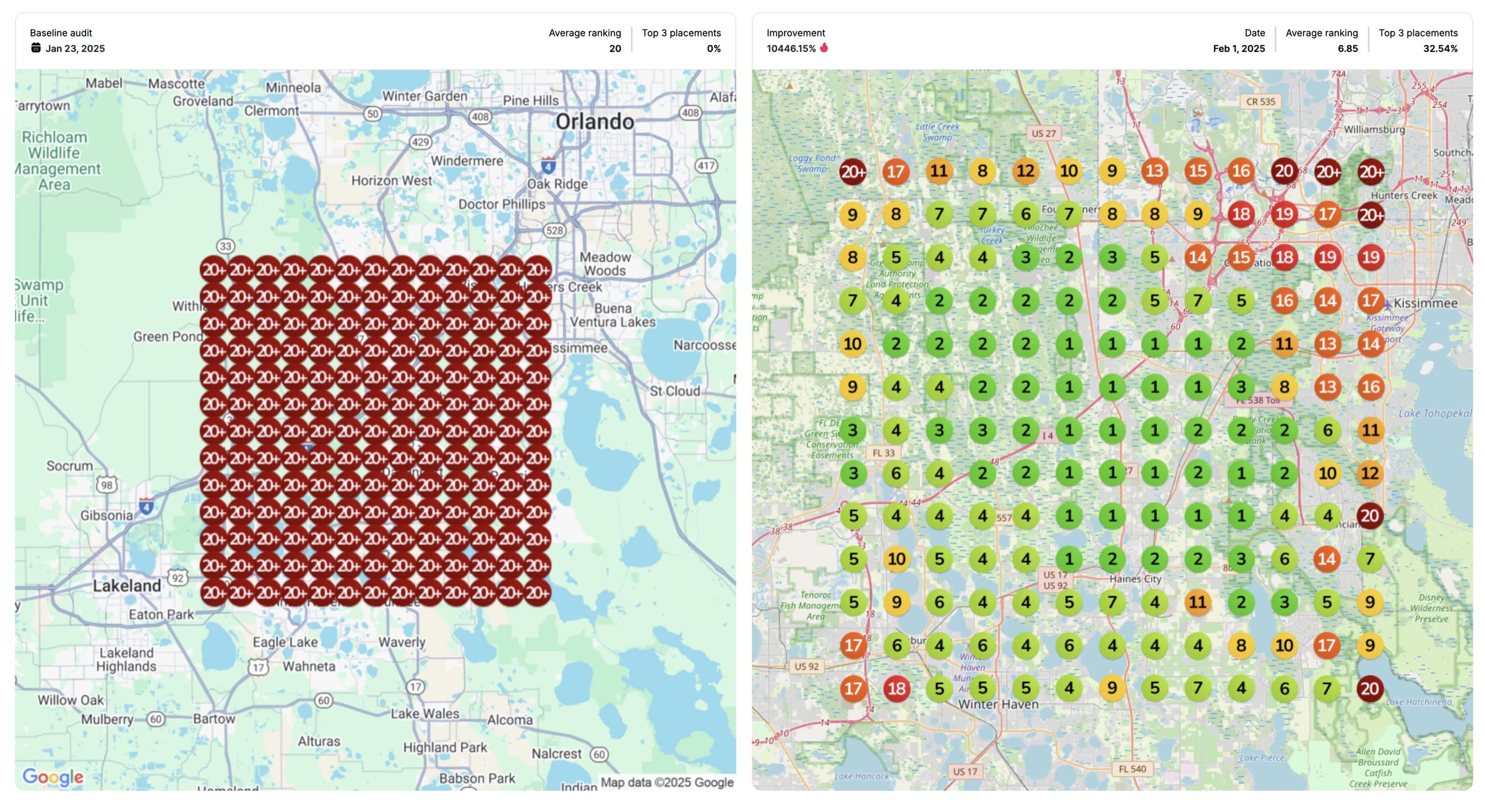
Real evidence looks like detailed case studies, specific testimonials and tactics tied to local results: more calls, better Map Pack placement and more foot traffic. Good cases separate what the agency did from what would have happened anyway, and they mention outside factors such as season or events.
- Before-and-after metrics with dates and context
- The tactics used and why they fit local intent
- Measurable KPIs: calls, direction requests, conversions and local rankings
- How the results were attributed to the work
What local SEO results look like
Wins show up as higher Map Pack placement, stronger local keyword rankings and more calls or bookings. The usual tactics are profile optimization, location pages and citation cleanup. Results build over months, and the most convincing examples tie visibility to revenue or appointments. One of ours: a mold remediation company in Orlando whose Google clicks grew 3.4 times in five months. When an agency shows you a case like that, ask how it accounted for seasonality and paid campaigns.
How to read testimonials
Useful testimonials include numbers, timeframes and a clear reference to the work done. Praise without specifics tells you little. Check them against what you can see for yourself: live rankings, the client’s Google Business Profile and the reviews on Google. Strong ones describe the goal, the approach and the outcome. Ours are on the testimonials page.
How an agency should improve your local marketing
A phased plan works best. An experienced local agency should follow something close to this and refine it over time:
- Audit and technical fixes. Fix mobile issues, speed and indexing so search engines can crawl and rank your pages.
- Profile and citation hygiene. Standardize name, address and phone, list services and attributes, and manage reviews.
- Local pages and content. Build pages for the areas you serve and for event-driven searches.
- Geo-targeted ads. Run radius or neighborhood campaigns with copy that references local landmarks or events.
- Measure and iterate. Use call tracking, UTM tags and Google Analytics 4 to connect online actions to bookings, then refine bids and content.
Local SEO tactics that work here
Effective local SEO in Orlando centers on Google Business Profile optimization, local business schema, neighborhood and event content, and consistent citations in trusted directories. A solid profile has complete categories, service listings, accurate hours and quality photos. Local content captures both resident and visitor searches.
Social media in 2026
Social strategy now leans on short-form video, partnerships with local creators and ads timed to events and tourism cycles. Separate offers for residents and visitors improve results. These tactics support search and paid ads by creating awareness that converts later through your landing pages and your profile. See how we handle it in social media marketing.

Why transparent reporting matters
Clear reporting lets you make decisions: move budget, stop what is not working and repeat what is. A good report includes the numbers for each service, a plain explanation and recommended next steps.
| Metric | What it shows | How to read it |
|---|---|---|
| Profile views and actions | Visibility and engagement on Google Maps | Rising views and actions signal growing local interest. Compare the pattern with the event calendar. |
| Local keyword rankings | Positions for neighborhood and service searches | Track long-tail neighborhood phrases to measure hyper-local progress. |
| Cost per acquisition | Efficiency of paid channels | Compare it with what a customer is worth over time. Adjust bids around high-demand dates. |
| Calls and direction requests | Direct signals of local intent | Use call tracking to tie campaigns to visits and appointments. |
For example, call tracking may show that a neighborhood landing page paired with local ads delivers your cheapest leads. That tells you to build more pages like it. Clear reports also end most arguments about attribution and set realistic timelines.
Tools an agency should use
Google Analytics 4 for site data, Google Search Console for search data, Google Business Profile for local metrics and a rank tracker that measures positions across a map. Dashboards should show trends, context and action items, not raw tables. A sensible cadence is a monthly summary plus weekly checks on active campaigns.
The short version
Choose an agency that knows the market, shows its numbers and explains its work in plain language. Insist on clear KPIs and honest reporting. To see how the local options differ, read our comparison of the best marketing agencies in Orlando, or talk to us.
More help with the decision.
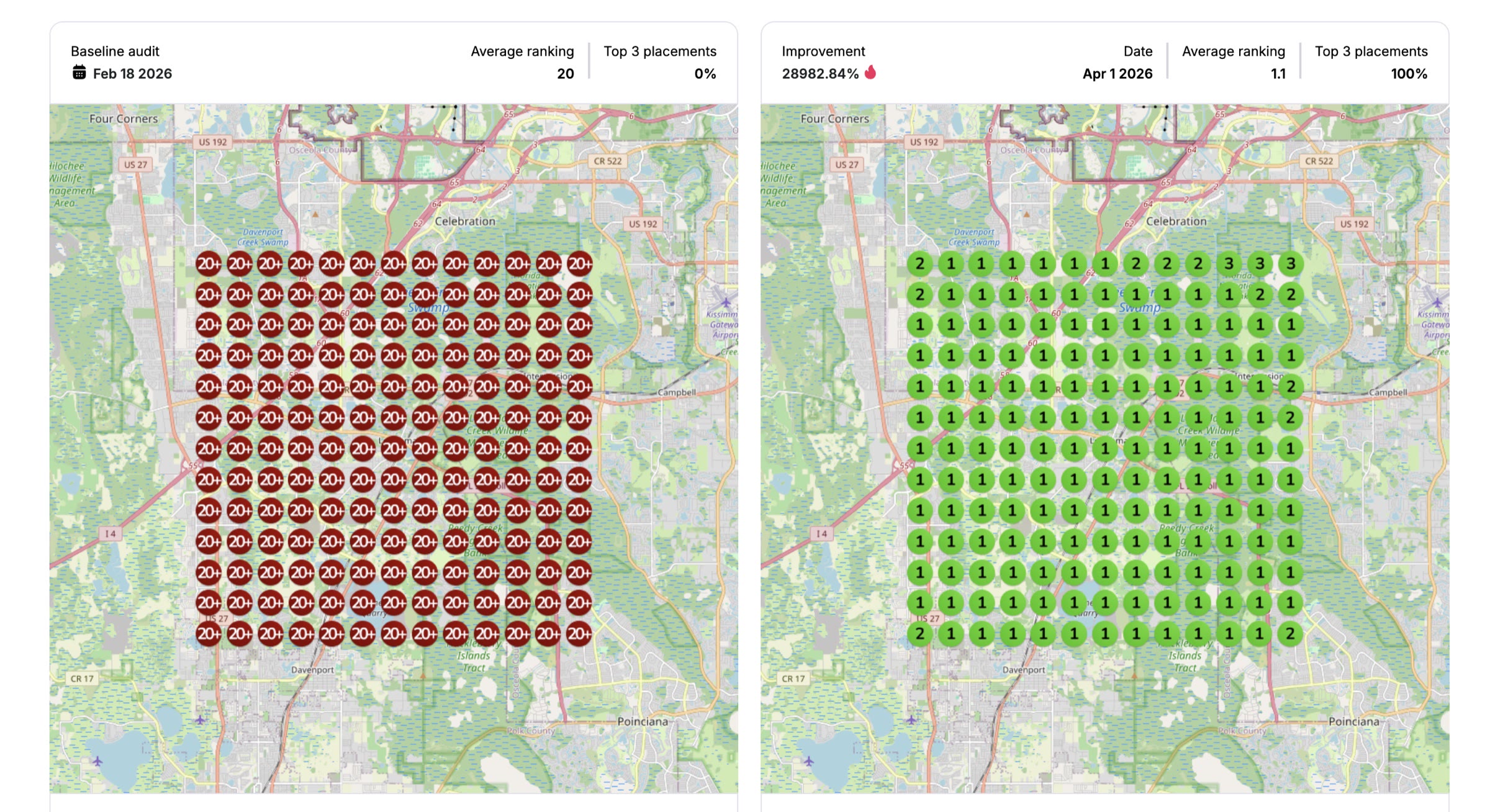

Look for case studies with measurable results in an industry close to yours: more calls, more leads, stronger local visibility. Each one should say what the starting point was, what the agency did and how long it took. A wall of logos without numbers tells you who they worked with, not what they achieved.
Ask for campaigns aimed at local audiences and how they were adjusted for local trends or events. Ask which neighborhoods or cities they would target for your business and why. An agency that knows the market answers with specifics, not with a description of its general process.
It ties what the agency earns to results, which can lower your upfront cost and your risk. It only works with clear KPIs, tracking both sides trust and a written definition of a valid lead. Without those, performance deals turn into arguments about what counts.
A monthly summary is standard, with weekly updates while campaigns are active or being launched. Agree on the cadence and the format during onboarding. A report is useful when it ends with what the agency will do next and why.
Reviews and comments show what customers value and where the service falls short. A good agency reads them, spots the themes and uses them in your messaging, your offers and your targeting. Acting on feedback also builds credibility with the next customer who reads those reviews.
Let’s see if we are the right fit.
Month-to-month. No long-term contracts.
Call (407) 974-6620